
Retinal detachment is a serious eye condition. It is due to the separation of the retina from the more external membranes of the eyeball with which it is normally in close contact.
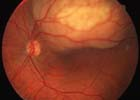
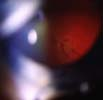
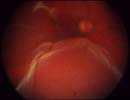
Primary retinal detachment:
It can be the direct consequence of an ocular globe trauma, with or without a wound to the latter. Most often, it occurs in the absence of trauma, regardless of age. Myopia is an aggravating factor, but the condition can also affect non-myopic individuals.
Retinal detachment is always caused by the presence of a tear in the retina. This tear can vary in size, ranging from a small hole to a giant tear. This lesion most often occurs in an area of peripheral retina that has been weakened by pre-existing abnormalities (thinning or poor vascularization).
Under the influence of traction from the vitreous, or when posterior vitreous detachment occurs, these weakened retinal areas can tear or perforate. A breach is thus created, allowing the liquid contained in the vitreous to infiltrate and gradually detach the retina, leading to a rapid and increasingly significant loss of vision. This tear is often accompanied by flashes of light, visible even in daylight.
Prevention of retinal detachment consists of systematically searching, during a routine examination by an ophthalmologist, for any retinal lesion likely to cause a tear, even in the absence of warning signs (floaters, flashes). The discovery of this type of lesion makes it possible to treat the affected retina preventively by photocoagulation with a laser.
The treatment of retinal detachment, once it has occurred, is necessarily surgical.
Secondary retinal detachment:
Retinal detachment may sometimes be secondary to an intraocular condition other than a tear. This is particularly the case for retinal elevations such as those encountered in certain severe intraocular inflammations (see "uveitis") or symptomatic of the presence of an underlying benign lesion (hemangioma for example) or malignant lesion (carcinoma or metastasis for example).